
What compression ratio means for aviation piston engine reliability
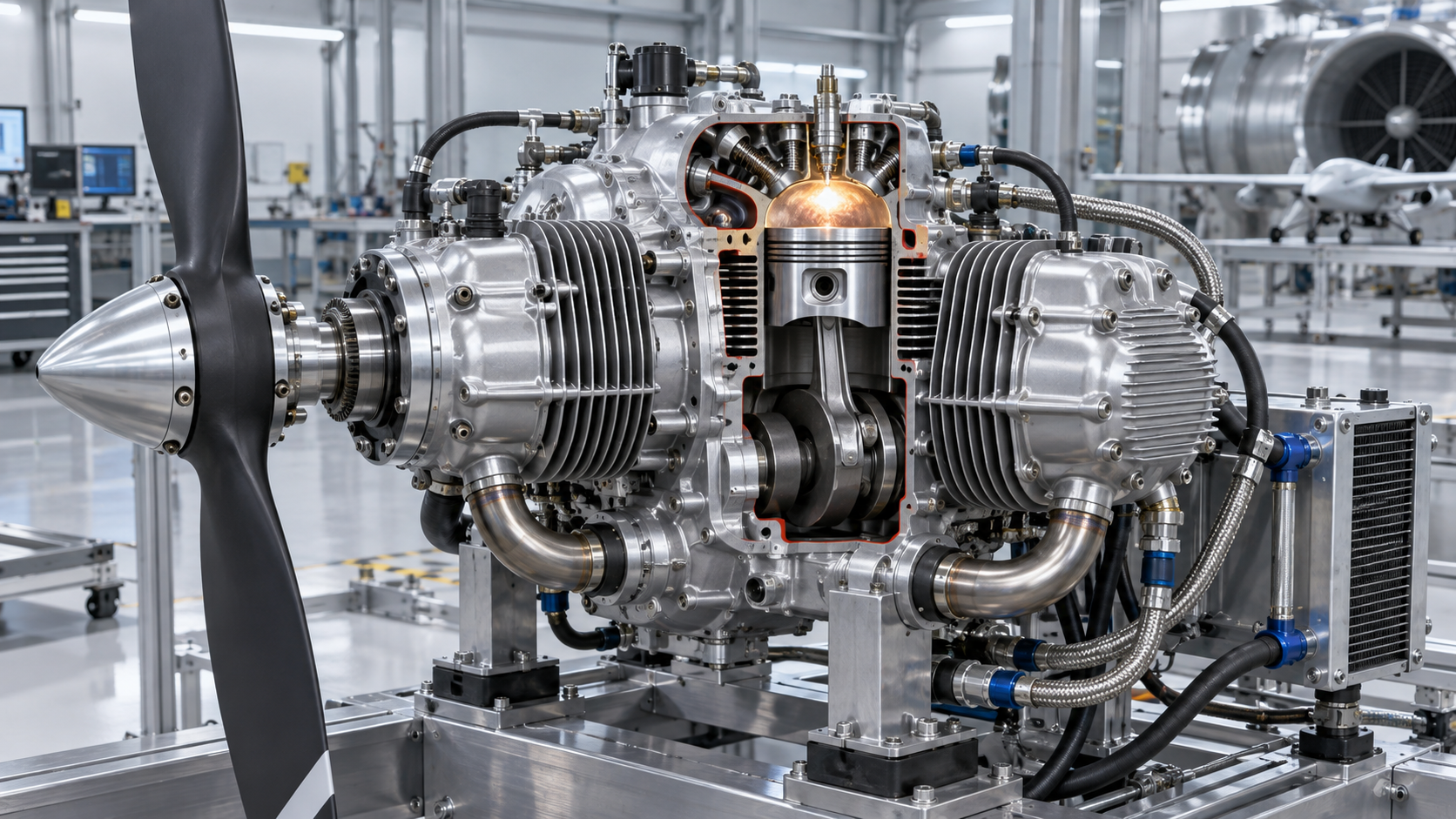
For technical evaluators, compression ratio is one of the most revealing specifications on an Aviation Piston Engine data sheet—and one of the easiest to misread. A higher figure may suggest stronger thermodynamic efficiency and potentially more power from a given displacement. Yet in an aircraft engine, especially one used for unmanned platforms, the question is rarely “Which ratio produces the highest peak output?” The more important question is whether the selected ratio supports repeatable, safe combustion throughout the actual mission envelope.
That envelope may include hot ground starts, a rapid climb, low-density air at altitude, extended cruise at a fixed throttle setting, abrupt payload changes, and limited opportunities for in-flight intervention. Compression ratio affects all of these conditions through its influence on cylinder pressure, charge temperature, knock tendency, fuel tolerance, cooling demand, and mechanical stress. It therefore belongs in a reliability assessment, not only in a performance comparison.
Compression ratio: a simple definition with complex consequences
The geometric compression ratio is the ratio between the total cylinder volume when the piston is at bottom dead center and the remaining clearance volume when it reaches top dead center. A ratio of 10:1, for example, means the trapped charge is compressed into one-tenth of its original volume before ignition.
In broad thermodynamic terms, increasing compression ratio can improve thermal efficiency. More of the fuel’s chemical energy can be converted into useful work rather than leaving through the exhaust or cooling system. For an Aviation Piston Engine, this can support better specific fuel consumption, improved torque characteristics, or useful power from a compact package.
But combustion does not take place in an ideal textbook cycle. The real engine experiences heat transfer to the cylinder head, changes in mixture quality, ignition timing variation, manufacturing tolerances, deposits accumulated over service life, fuel-property variation, and changing ambient conditions. As compression ratio rises, the margin between normal combustion and damaging abnormal combustion generally becomes narrower.
That is why a compression ratio cannot be judged in isolation. Its reliability value depends on the complete combustion system: combustion chamber shape, bore and stroke relationship, piston crown design, ignition architecture, fuel and lubrication specification, cooling path, mixture control, engine control calibration, and the intended operating profile.
The reliability chain begins inside the cylinder
During normal spark-ignition combustion, the flame front travels smoothly across the compressed air-fuel mixture after the spark event. Cylinder pressure rises in a controlled manner, with peak pressure occurring at a crank angle that delivers efficient work to the piston. A well-matched compression ratio helps this process by increasing charge density and improving the conditions for stable ignition.
The reliability concern emerges when unburned end-gas ahead of the flame front reaches a temperature and pressure at which it auto-ignites. This phenomenon, commonly called detonation or knock, produces very rapid pressure oscillations. Severe or sustained knock can erode piston crowns, damage ring lands, overheat exhaust valves, overload bearings, and accelerate deterioration of head-gasket or cylinder sealing interfaces.
Pre-ignition is related but different. In that case, the mixture ignites before the intended spark event because of a hot spot, such as an overheated spark-plug electrode, carbon deposit, sharp chamber feature, or excessively hot valve area. Pre-ignition can create destructive cylinder pressures even more quickly than ordinary knock. A high compression ratio does not automatically cause pre-ignition, but it raises the thermal severity of the environment in which pre-ignition risks must be controlled.
For an evaluator, the key point is clear: compression ratio affects the detonation margin, but detonation margin is a system-level result. A lower-ratio engine with weak cooling or poorly controlled ignition may be less robust than a moderately higher-ratio design with disciplined thermal management and validated control logic.
Why UAV duty cycles make the decision less straightforward
Many ground engines encounter varied throttle use and frequent opportunities for reduced load. UAV propulsion systems can operate differently. A fixed-wing platform may require a long period of high continuous power during climb, followed by sustained cruise at a tightly controlled speed. A VTOL aircraft may place short but intense demands on its propulsion system during transition or vertical operation. Multi-rotor applications add rapid transient loading and, in some installations, restricted airflow around the engine compartment.
These missions turn compression ratio into a practical thermal-management issue. A ratio that performs well during a short dynamometer run may create an unacceptably small operating margin during a hot-day climb with a heavy payload. The engine may still meet a nominal power target, but cylinder-head temperature, exhaust-gas temperature, piston temperature, and knock sensitivity may move toward undesirable limits.
Altitude adds another layer. As altitude increases, ambient pressure and air density decline. Naturally aspirated engines generally see lower intake charge density and lower available power. This can reduce some knock tendencies at steady settings, but it does not make compression-ratio selection simple. Cooling air density also declines, mixture behavior changes, and a mission may include repeated altitude transitions. Turbocharged or otherwise boosted configurations require even more careful analysis because manifold pressure can be maintained or elevated despite reduced ambient pressure.
Technical teams should therefore assess the engine over the full intended flight profile, not merely at rated power under standard test conditions. The most useful question is: Where is the smallest combustion and thermal margin likely to occur? It may be at takeoff, at a particular climb altitude, during a high-temperature loiter, or after a transient throttle event rather than at the published maximum-power point.
Higher compression is not automatically better efficiency
The theoretical efficiency benefit of increased compression ratio is real, but the practical trade-off can reverse when the engine must be calibrated conservatively to protect itself. If a high-ratio design requires retarded ignition timing, richer mixture operation, restricted boost, or narrowly controlled fuel quality to avoid knock, its real mission-level efficiency advantage may be limited.
Conversely, a slightly lower compression ratio may permit more stable ignition timing, broader fuel tolerance, lower heat rejection, and less protective enrichment under demanding conditions. The resulting engine may deliver more predictable fuel consumption over an actual mission, even if its theoretical cycle efficiency is lower.
This is particularly relevant for unmanned aircraft programs, where endurance calculations often depend on consistent engine behavior rather than a best-case benchmark. A small gain in peak brake power is of limited value if it introduces additional temperature management requirements, narrows acceptable fuel specifications, or reduces confidence during long-duration operation.
Fuel specification is part of the compression-ratio decision
Compression ratio and fuel quality are inseparable. A fuel’s resistance to knock determines how much pressure and temperature the mixture can withstand before abnormal combustion becomes likely. The relevant fuel property may be expressed differently depending on fuel type and test method, so evaluators should avoid treating a single octane number as a universal answer.
More important than a headline rating is the fuel-control strategy for the intended deployment. Is the engine designed around a tightly controlled aviation fuel supply, or must it remain reliable where fuel consistency is less predictable? Does the system specify minimum fuel requirements, storage practices, contamination controls, and acceptable blend limits? Are ignition timing and mixture settings protected against unsuitable fuel selection?
For a UAV fleet, logistical reality matters. An engine optimized around a high compression ratio and premium fuel may be appropriate for a controlled defense or industrial operating environment. It may be a poor fit for dispersed operations where fuel sourcing, storage temperature, and handling discipline vary. The correct engineering choice reflects the whole support system, not an abstract preference for high or low compression.
Component life: compression loads travel beyond the piston
Every combustion event transfers load through the piston, rings, wrist pin, connecting rod, crankshaft, bearings, cylinder fasteners, and engine structure. Higher peak cylinder pressure can improve torque, but it also increases fatigue demands across this load path. Reliability is shaped not simply by maximum pressure, but by the number of high-load cycles, the temperature of components during those cycles, lubrication performance, and stress concentrations created by the engine’s geometry.
Piston ring lands and crown areas deserve close attention because they operate close to the combustion event. Excess heat can compromise ring sealing, increase blow-by, promote oil consumption, and elevate crankcase pressure. Exhaust valves face their own combination of high temperature and cyclic loading. If cooling distribution is uneven, nominally identical cylinders may age differently, with one cylinder becoming the limiting factor for the entire powerplant.
Compression ratio also interacts with deposits. Carbon accumulation can effectively reduce combustion-chamber volume, increasing the effective compression condition and creating local hot spots. An engine that is reliable when new must retain sufficient margin as deposits form during service. This is one reason endurance testing, teardown inspection, and trend monitoring remain more informative than a new-engine power curve alone.
What technical evaluators should request and compare
A published compression ratio should be treated as the beginning of a review, not the conclusion. When comparing an Aviation Piston Engine for a UAV program, evaluators should seek evidence that the selected ratio has been validated within realistic operating boundaries.
- Rated, continuous, and transient operating conditions: Determine whether compression-related limits were assessed only at peak power or across sustained mission loads.
- Fuel requirements and tolerance: Review the specified fuel grade, acceptable variations, contamination controls, and consequences of off-spec fuel.
- Combustion-control approach: Understand ignition timing maps, knock sensing where applicable, mixture control, sensor plausibility checks, and fail-safe behavior.
- Thermal evidence: Ask for cylinder-head, exhaust-gas, oil, and coolant or cooling-air assessment across hot and cold ambient conditions.
- Altitude and installation effects: Confirm that testing accounts for inlet losses, cowling airflow, exhaust backpressure, propeller loading, and actual aircraft installation constraints.
- Endurance and teardown criteria: Look beyond pass/fail duration. Review piston condition, ring wear, valve condition, bearing surfaces, compression consistency, and any evidence of abnormal combustion.
- Production control: Compression ratio depends on clearance volume. Manufacturing control of piston geometry, cylinder-head machining, gasket thickness, and assembly processes is therefore directly relevant.
It is also useful to distinguish geometric compression ratio from the effective condition experienced by the engine. Intake-valve timing, boost level, volumetric efficiency, intake-air temperature, and residual exhaust gases all influence the pressure and temperature of the trapped charge. Two engines with similar published geometric ratios can have very different real-world knock behavior.
A practical framework for selecting the right balance
The appropriate compression ratio begins with mission priorities. A lightweight surveillance UAV seeking long endurance may prioritize fuel efficiency, but only within a thermal and fuel-quality envelope it can reliably maintain. A high-altitude fixed-wing aircraft may demand stable behavior through wide ambient changes. A platform intended for rapid deployment may value fuel tolerance and straightforward maintenance more than the final increment of thermodynamic efficiency.
In each case, the best engine is usually the one with measurable operating margin. Margin is the quiet reserve that remains when the day is hotter than planned, the payload is near its upper limit, cooling airflow is less favorable than predicted, or the aircraft spends longer at high power than the nominal mission profile. In aviation, that reserve is often more valuable than a specification optimized for a single ideal condition.
Shandong Shengsheng Electric Equipment approaches UAV engine development from this system perspective. Its work in unmanned propulsion, supported by engineering collaboration with aerospace and research institutions, reflects the need to connect combustion design with production consistency, installation requirements, and mission-specific validation. For evaluators, that connection is important: the reliability of an Aviation Piston Engine is not defined by compression ratio alone, but by how responsibly that ratio is integrated into the complete powerplant.
Compression ratio should therefore be read as a design signal. It indicates the engine designer’s intended balance among efficiency, power density, fuel requirement, thermal loading, and durability. The strongest technical assessment does not reward the highest number on a specification sheet. It verifies that the number is supported by combustion control, cooling capacity, component design, manufacturing discipline, and test evidence appropriate to the aircraft’s real operating life.
First class quality service and professional after-sales team.
Get in Touch
*We respect your confidentiality and all information are protected.